
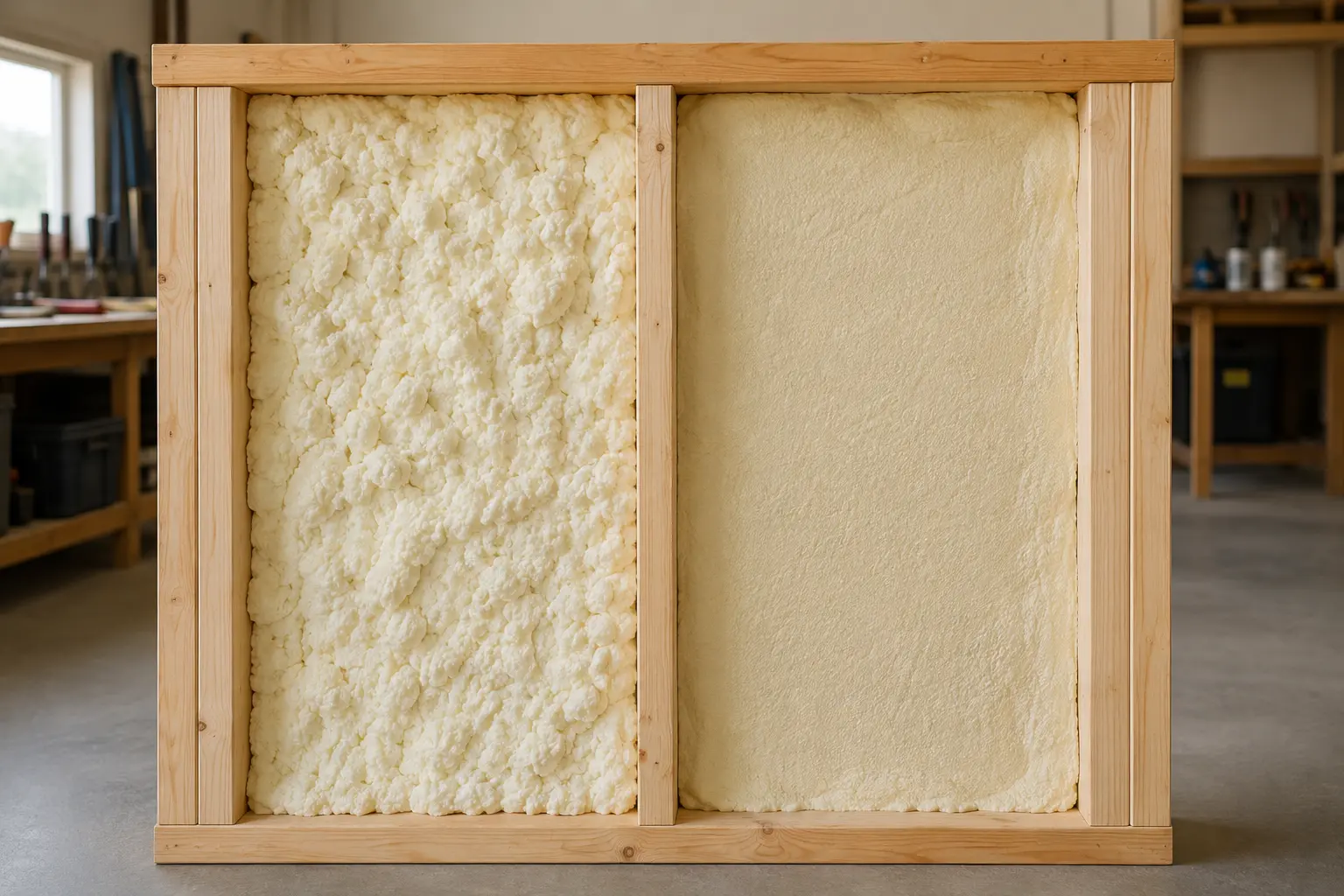
The core difference
Open-cell foam is lighter, softer and more vapor permeable. It expands broadly to fill deep cavities and can support sound dampening. Closed-cell foam is denser, more rigid and generally delivers more R-value per inch with lower vapor permeance at suitable thicknesses.
Hammond-climate perspective
In a hot-humid climate, moisture direction and drying potential matter. Closed-cell is often considered for crawl spaces, metal buildings and limited-depth assemblies. Open-cell may fit deep wall or roof cavities when the overall design supports its vapor permeability.
A provider should evaluate water management, roof condition, HVAC, ventilation and code before selecting either material.
Compare total installed assemblies
Open-cell usually costs less per board foot, but it often requires more thickness. Closed-cell costs more per board foot but provides more R-value per inch. Compare the specified result, preparation and barriers—not only material price.