
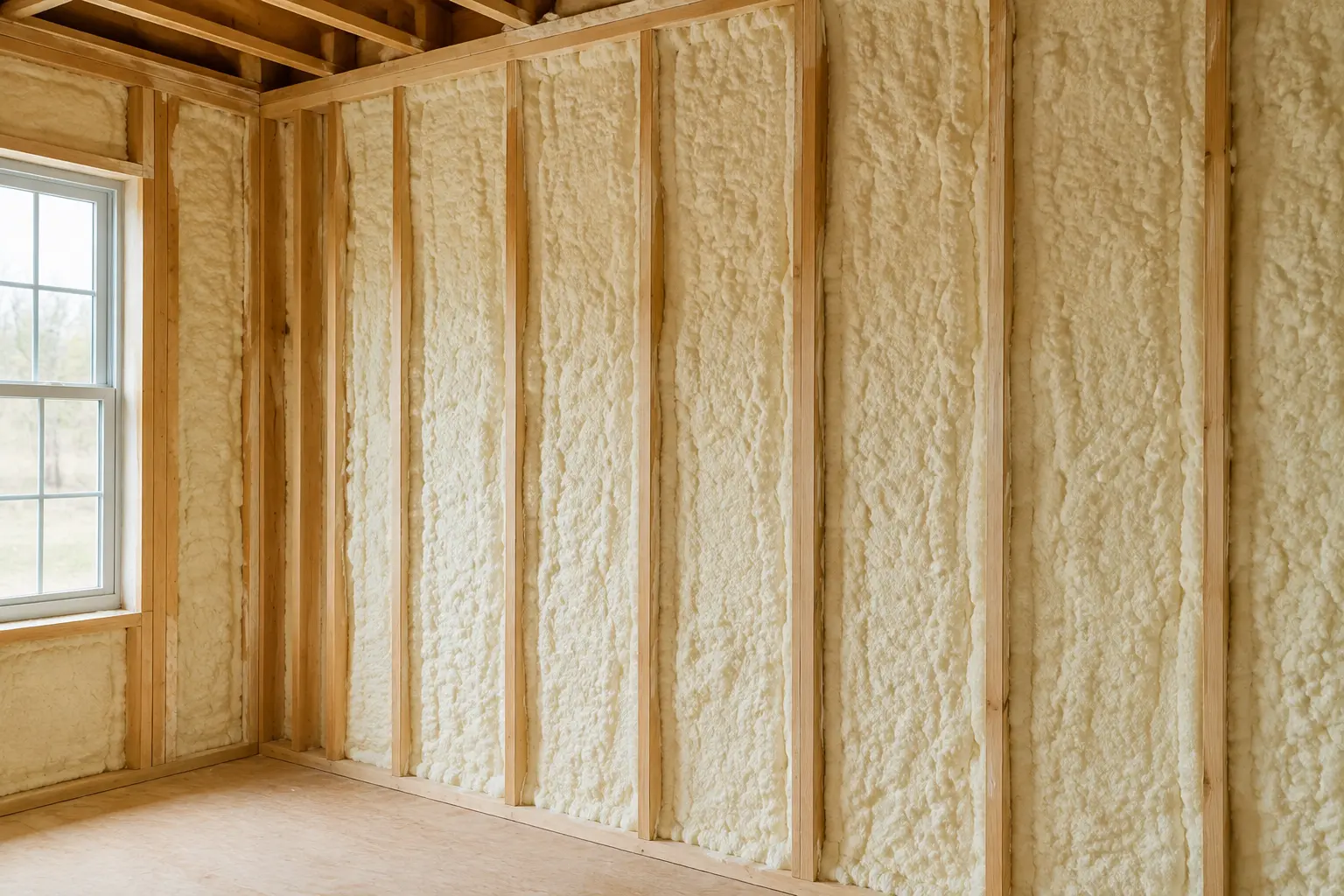
What open-cell foam is
Open-cell spray foam expands substantially and cures with a softer, lower-density structure. Its expansion helps it reach irregular gaps and create an air barrier at the specified depth.
Because it generally provides less R-value per inch than closed-cell foam, open-cell assemblies often use greater thickness. Product data and local code requirements should guide the design.
Cost-effective cavity coverage
Open-cell foam typically uses less material by weight and can cover large wall or roof cavities efficiently. That can make it a practical option when deep framing space is available and lower vapor permeance is not required.
Price should still be compared by complete assembly—not only by a per-inch or per-square-foot number.
Comfort and sound
Open-cell foam can reduce drafts by controlling air leakage. Its softer structure may also help dampen sound through interior walls, media rooms, bedrooms and offices, although it is not a complete soundproofing system.
Where it fits versus closed-cell
Open cell spray foam Hammond LA decisions should consider drying potential, roof design, vapor control, cavity depth and the intended use of the space. Closed-cell may be preferred where lower vapor permeance, rigidity or higher R-value per inch is important.
A participating provider should explain why the proposed foam type fits the specific assembly—not simply recommend one product for every building.